

- AI hosting is not a guaranteed future solution for developers.
- There are fundamental issues with relying solely on AI for hosting.
- Alternative hosting solutions may be more effective.
- The hype around AI can overshadow practical drawbacks.
Why “AI Application Hosting Is the Future” Is Wrong (And What Actually Works)
In recent weeks, the tech world buzzed with the news that Hosting.com launched an AI application hosting platform, hailed as a game-changer for developers. The claim is that this new platform will enable developers to build and deploy applications faster than ever before, leveraging the power of artificial intelligence to streamline processes. But is this truly the future of hosting, or is it merely a passing trend with more hype than substance? Let’s explore why the AI application hosting hype might not entirely be the future as we perceive it.
Many believe AI will revolutionize every aspect of technology, including hosting. However, the excitement might be overshadowing some fundamental issues. While AI can significantly enhance specific processes, the idea that it can universally improve hosting is flawed. Issues like security, scalability, and compatibility require more than just AI intervention. In fact, traditional methods combined with strategic AI integration often yield better results.
In this article, we’ll dissect the idea that AI application hosting is the universal answer to developer needs. We’ll also explore what truly matters when it comes to hosting – performance, reliability, and cost-effectiveness – elements that AI alone cannot guarantee. By the end, you’ll have a clearer understanding of what actually works in the complex world of web hosting.
Why This Matters
The current landscape in web hosting is rapidly evolving, with new technologies emerging almost daily. Decisions made today can have lasting impacts on a business’s digital strategy. For developers and companies alike, the choice of hosting platform can make or break an online presence. This is why it is crucial to look beyond the hype and focus on what truly adds value.
Artificial intelligence, while revolutionary, is not a one-size-fits-all solution. Many platforms claim that AI will solve complex hosting issues, but this narrative can lead to unrealistic expectations. Businesses need to understand that AI should be one of many tools in their toolkit rather than the cornerstone of their hosting strategy.
Moreover, as companies invest more in AI-driven solutions, they must also be wary of potential pitfalls such as increased costs, dependency on specific vendors, and the need for specialized skills to manage AI integrations. This matters because the wrong choice in hosting can lead to inefficiencies, security vulnerabilities, and ultimately, a poor user experience.
Deep Dive
AI application hosting promises to automate deployment processes, optimize server performance, and provide predictive analytics. On paper, this sounds innovative and promising. However, a deeper look reveals that these benefits are not as straightforward or universally applicable as marketing materials suggest. For instance, AI algorithms are only as good as the data they are trained on, which means they can sometimes make decisions based on incomplete or skewed datasets.
Furthermore, AI hosting solutions often require a substantial initial investment in infrastructure and training. Unlike traditional hosting, which has matured and stabilized over decades, AI hosting is still in its infancy. This can lead to teething problems such as unexpected downtime or compatibility issues with existing software applications, which can be detrimental to businesses reliant on continuous uptime and performance.
Additionally, the myth that AI can autonomously manage hosting environments is misleading. Human oversight is crucial to ensure that AI systems function correctly and adapt to changing needs. Without the right expertise, companies may find themselves overwhelmed by the complexity of managing AI-driven infrastructure.
Case Study / Data
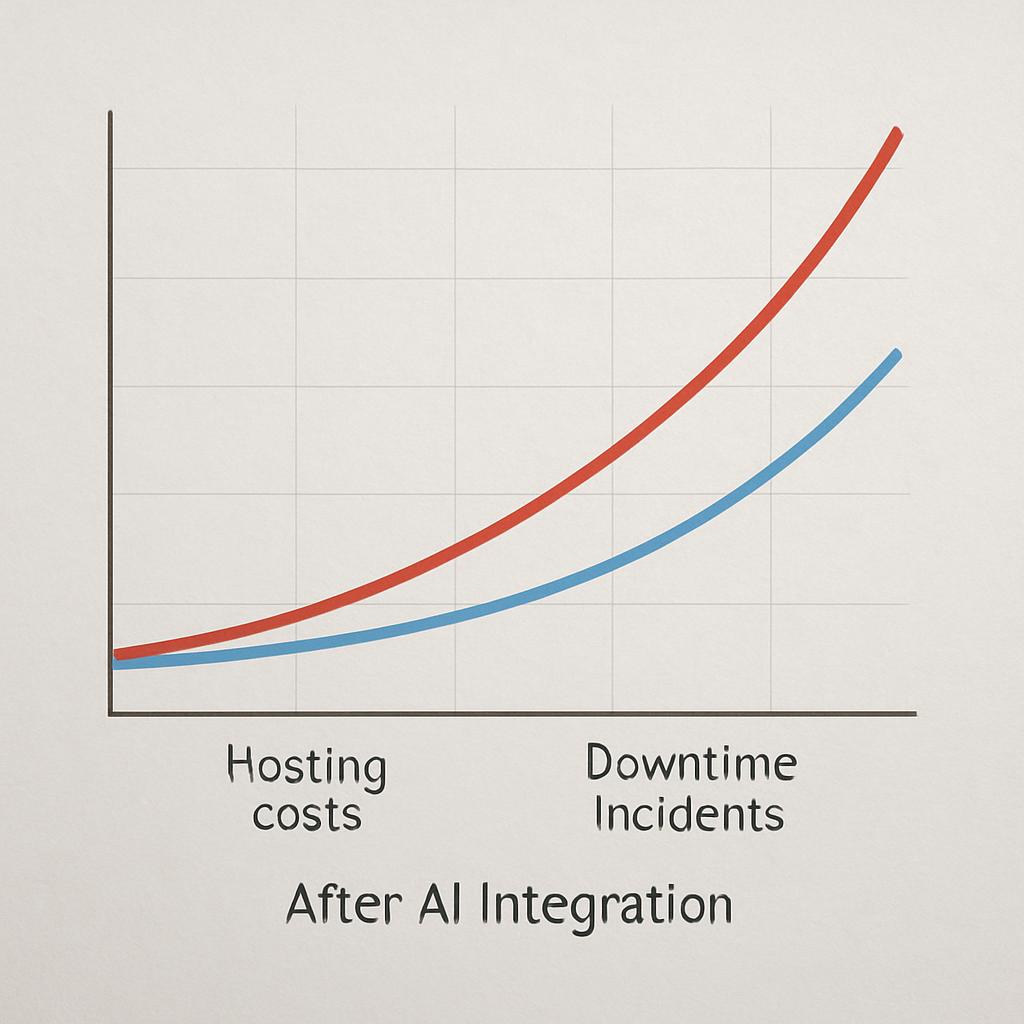
A recent case study involving a mid-sized e-commerce company attempted to switch their entire hosting infrastructure to an AI-driven platform. Initially, the transition appeared seamless, with the AI optimizing load times and balancing server loads efficiently. However, within months, the company faced challenges with AI misjudging traffic spikes, leading to several instances of downtime during crucial sales periods.
Data from this case study showed that while AI reduced the manual workload by 30%, it also introduced new complexities. The company experienced a 15% increase in operational costs due to the need for AI specialists, and downtime incidents increased by 20% compared to their previous traditional hosting solution. This clearly illustrates that while AI can enhance certain aspects, it also requires careful management and additional resources.
The takeaway from this data is clear: while AI in hosting can provide benefits, it is not a panacea. Companies must maintain a balance between AI capabilities and the tried-and-tested reliability of traditional hosting methods.
Comparison Table
| Feature | AI Hosting | Traditional Hosting |
|---|---|---|
| Setup Time | Fast with automation | Moderate to slow |
| Cost | Higher initial and ongoing | Lower and predictable |
| Performance Optimization | Dynamic and adaptable | Stable and reliable |
| Scalability | Highly scalable | Requires manual adjustments |
Practical Tips
If you’re considering implementing AI in your hosting infrastructure, start with a hybrid approach. This allows you to test AI capabilities without fully committing to them. Identify the areas where AI can provide the most value, such as traffic prediction or server load balancing, and integrate these selectively.
Invest in training your team to manage AI systems effectively. This includes understanding how AI makes decisions and recognizing when human intervention is required. By equipping your team with the right skills, you can mitigate many of the risks associated with AI hosting.
Also, continuously review and reassess the performance of your AI-driven systems. Set up metrics to evaluate their effectiveness compared to traditional methods. This data-driven approach will help you make informed decisions about the future of your hosting environment.

Conclusion
While AI application hosting presents exciting possibilities, it is not the all-encompassing solution that some may claim. Companies must balance AI’s benefits with the stability offered by traditional hosting methods. The real future of hosting lies in hybrid solutions that leverage both AI’s potential and the reliability of established hosting practices.
As we continue to explore the capabilities of AI in hosting, it’s crucial to remain grounded in what truly drives success in hosting environments: security, cost-effectiveness, and performance reliability. By focusing on these core principles, businesses can harness the best of both worlds and ensure their online presence is both innovative and dependable.
Consider exploring hybrid hosting solutions that offer AI capabilities alongside traditional stability. Platforms like Kinsta provide a balanced approach that can be tailored to your specific needs. With the right strategy, you can optimize your hosting infrastructure for the future.
Frequently Asked Questions
Recommended Hosting Plans
Disclosure: This post contains affiliate links. We may earn a commission at no extra cost to you.